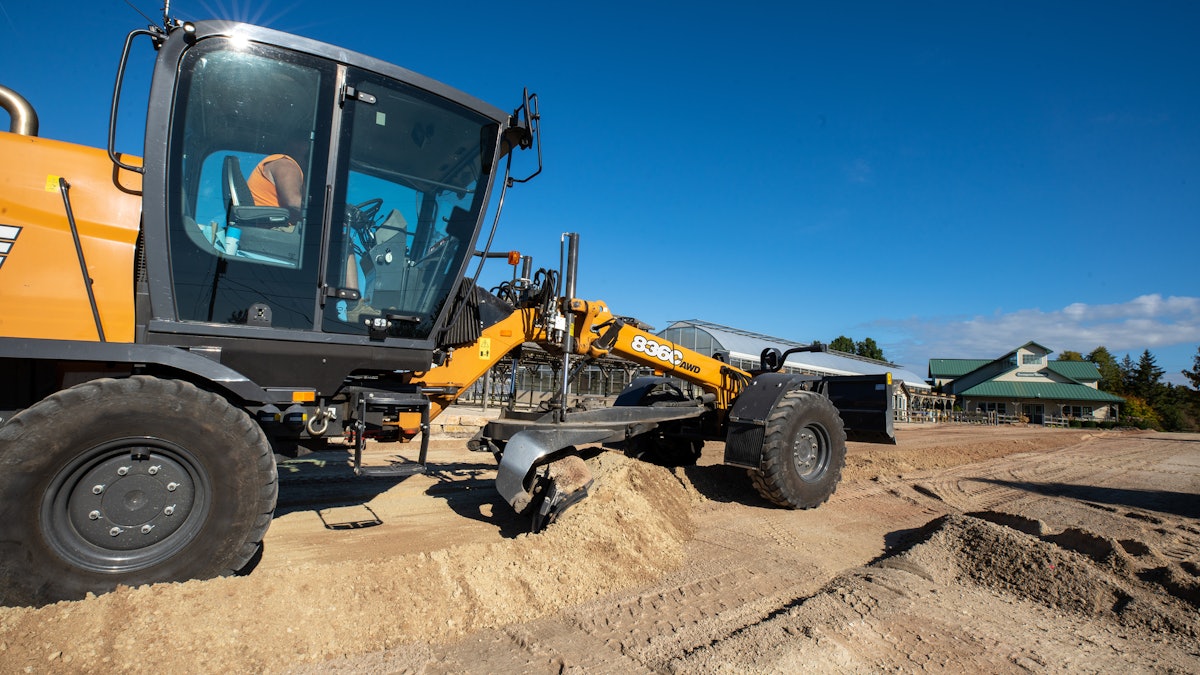
Road graders exist in various categories, which are normally categorized into mid-range and the premium models. Although they are basically intended to be used in an identical manner (grading and leveling surfaces), they vary widely in cost, functionalities, and abilities. The mid-range graders are thought of as the more economical alternative, but now a lot of contractors are wondering whether they can even live up to their more costly counterparts. As the expectations in the construction industry change and the equipment design is also evolving, this comparison should be examined closer.
The Evolution Of Mid-Range Graders
Mid-range graders were once seen as limited in power, versatility, and onboard technology. But over the last decade, manufacturers have pushed major improvements in both design and performance. Modern models are not only more powerful but also showing up at more demanding worksites than ever before. Features that used to be exclusive to premium machines like precision blade control, enhanced cab visibility, and greater operator comfort are now becoming standard. So if you're considering a road grader for sale, today’s mid-range options deliver serious value and capability for heavy-duty grading tasks.
Key Performance Factors To Compare
Price alone doesn’t determine a grader's performance. The most important thing is how the machine fares in the actual working conditions. Responsiveness of the blade, hydraulic accuracy, weight balance, and the ability to pull are far more important than a fancy label. Mid-range graders have recorded solid improvement in all these areas. This has reduced the gap considerably between the two classes in terms of blade control and finish and the concept of a mid-range machine is tolerable even on high-spec jobs. To most operators, price is no longer the concern but the value of the performance in dollars.
Technology Bridging The Gap
Technology is also contributing in closing the gap at a rate not anticipated. Mid-range graders are already introducing telematics, automatic grade control, and on board diagnostics. These devices make work more accurate and less tiring to the operator, particularly large grading works. There are even models that provide touchscreen control panels and real-time feedback. Though the top-shelf models continue to hold the advantage in raw integration and computing power, mid-range options are closing the gap at sufficient pace to make heads turn. This change has transformed the purchasing behaviors particularly among those seeking long term operational efficiency.
Maintenance And Repair Practicality
Maintenance may either be its savior or killer when it comes to a machine. Mid-range graders are generally simpler in design and this usually implies that they are also simpler to service. Their mechanical systems can be simpler but the result is usually faster repairs and the availability of replacement parts. The more sophisticated premium machines can have tighter tolerance and more complex electronics that may result in more specialized and expensive maintenance. The dynamics of such maintenance may be more influential on overall cost of ownership in the long-run than the purchase price.
Fuel Efficiency And Operational Costs
The lower fuel consumption and overall operating costs are among the most attractive features of mid-range graders. These machines typically use less fuel during long working hours due to their slightly smaller size and moderate power compared to premium models. This efficiency proves valuable on job sites requiring continuous operation over weeks or even months. While high-end graders might offer more speed or output, mid-range options often come out ahead when total costs are calculated over time. It’s this balance that makes them especially appealing for buyers browsing heavy machinery for sale on a tighter budget.
Use Case Matching
The nature of the project has a very significant influence on whether or not a mid-range grader is a viable option. Mid-range graders are ideal in most roadwork, commercial works or municipal work. They give the required accuracy and reliability without incurring the extra expense. Nevertheless, there also exist instances where the premium models do have an advantage, i.e., in high demand cases like large scale infrastructure or mining operations since they are built to run under more rigorous conditions. The thing is to select a machine suited to the job, not the nameplate. Mid-range graders are just right in most real life situations.
Overview
A notion that only the machines of the first quality can conduct serious work is questioned. Although high-end graders continue to deliver blistering performance and the latest features, middle-of-the-road graders have taken astonishing strides. They have now become a good combination of technology, reliability and affordability. The decision of many contractors is the return on investment. It is reasonable that a mid-range grader is capable of taking up the job requirements at a cheaper ownership cost. Status is no longer the driver and mid-range graders are demonstrating their ability to up their game to smart value.
Read More: Best Road Construction Motor Grader for Low-Experience Operators